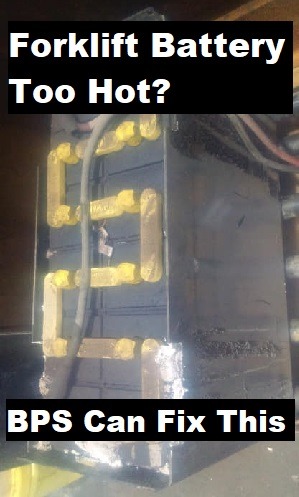
A failing forklift battery can significantly impact your operations, grinding your business to a halt and potentially damaging your equipment. At BPS, we can help you identify if your forklift battery is at the end of its life and advise you on whether repair or replacement is the best solution.
Maximizing Forklift Battery Lifespan
Forklift batteries don’t last forever. A typical lead-acid forklift battery is designed for approximately 1,500 charging cycles. For a single-shift operation, this usually translates to about a five-year lifespan, assuming proper maintenance.
To get the most out of your forklift battery, follow these essential guidelines:
- Adhere to manufacturer recommendations: Always follow the manufacturer’s specific guidelines for watering and overall battery maintenance.
- Schedule regular servicing: Have your forklift battery professionally serviced on a consistent basis to catch potential issues early.
- Avoid partial recharges: Only recharge the battery when it has discharged to 20 percent. Conventionally charged batteries have a limited number of charging cycles, and frequent “top-offs” can waste these cycles.
- Perform weekly equalization charges: This helps to balance the charge across all cells in the battery, extending its life and maintaining performance.
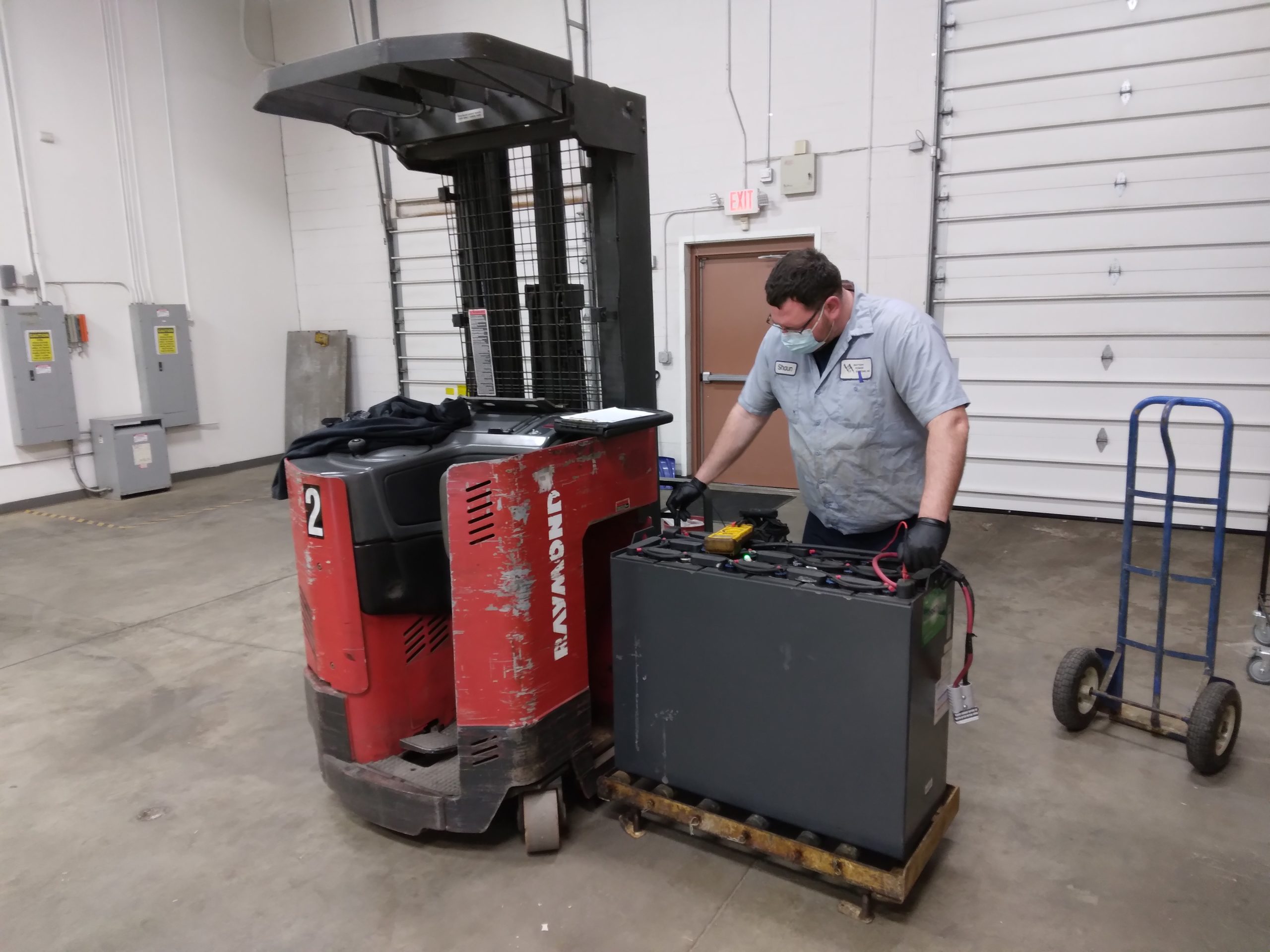
Is Your Forklift Battery Dying? Signs It’s Time for an Inspection
A noticeable decline in your forklift battery’s ability to hold a charge is often the first indication that a replacement may be necessary. However, if your battery is relatively new (only a few years old) and has fewer than 1,000 charging cycles, a repair might be a more cost-effective solution than immediate replacement.
Here are additional signs that your forklift battery may be failing:
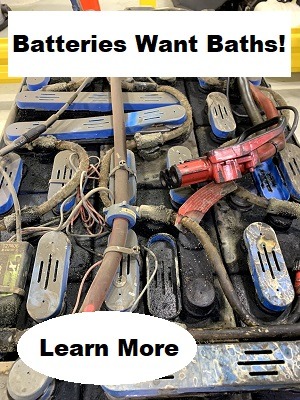
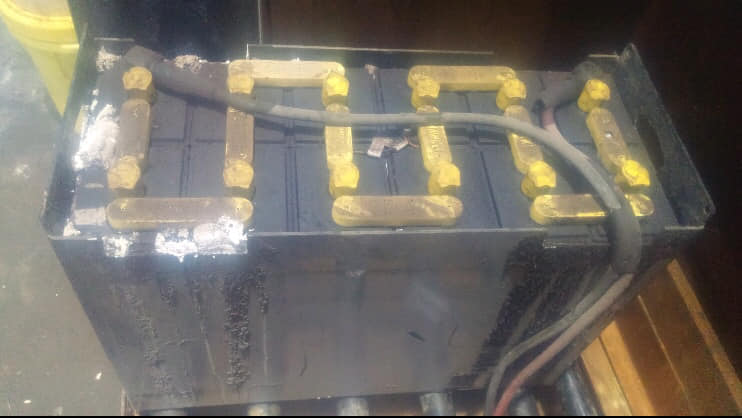
- Corrosion on the battery case: Visible rust or degradation on the exterior of the battery.
- Spilled acid on the exterior: Any evidence of electrolyte leakage on the battery’s surface.
- A rotten egg smell: This distinct odor indicates the presence of hydrogen sulfide gas, a sign of overcharging or internal damage.
- Smoke: Smoke emanating from the battery is a serious warning sign and requires immediate attention.
- Corroded or damaged terminals: Degraded or broken connection points.
- Dim or flickering displays: Unstable or weak power supply affecting the forklift’s electronics.
- Poor response time: Sluggish or inconsistent performance from the forklift.
If you observe corroded or damaged terminals, excessive sulfation, or acid leakage, it’s crucial to have your battery inspected by a BPS service technician immediately.
Excessive sulfation is typically a result of consistent underwatering, while acid leakage often stems from overwatering. In either scenario, the battery will be covered in a hazardous substance. For the safety of your team, do not allow employees to handle the battery without proper training and personal protective equipment (PPE). Contact Battery Power Systems today to have a qualified technician evaluate whether your forklift battery is still safe for operation.