THE BACKGROUND
A major manufacturer of heavy-duty trucks was faced with a material handling challenge when they decided to migrate from a one shift to two shift operation at its 1 million + square foot vehicle assembly plant. This plant is in operation two shifts per day, 240 days per year, with a fleet of 130 lift trucks.
East Penn worked closely with the Fleet Manager within the truck manufacturer’s Logistics Engineering Group to recommend an optimized lift equipment power solution. This group’s responsibilities include evaluating the material handling needs of the plant and optimizing the right equipment choices and quantity.

THE CHALLENGE: A TWO-SHIFT OPERATION
The lead batteries that the plant had in use were perfectly suitable for powering the lift equipment when they operated a single shift; when the shift was over there was sufficient time to charge the traditional lead batteries before the next shift. As the truck manufacturer was looking to increase their material handling capabilities to support a two-shift operation, power and charging efficiencies became an important matter to consider. When the plant transitioned to two shifts running 16 hours per day, there wasn’t enough time to keep their lead batteries sufficiently charged and watered.
Properly managing the charging and watering cycles for 180 batteries was not possible with the current maintenance staff. Hence, the move to two-shifts would require quicker and greater power needs from both the battery and charger.
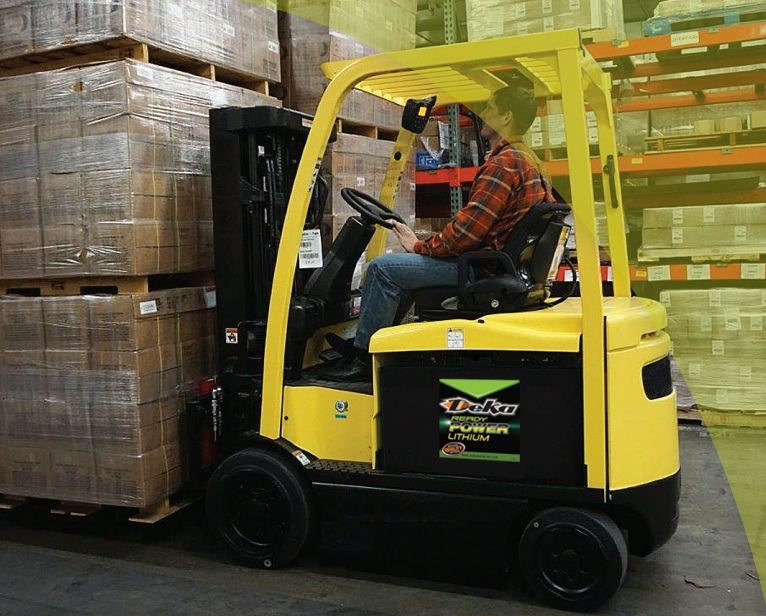
To meet that need, the truck manufacturer ultimately decided on Deka Ready Power Lithium Batteries.
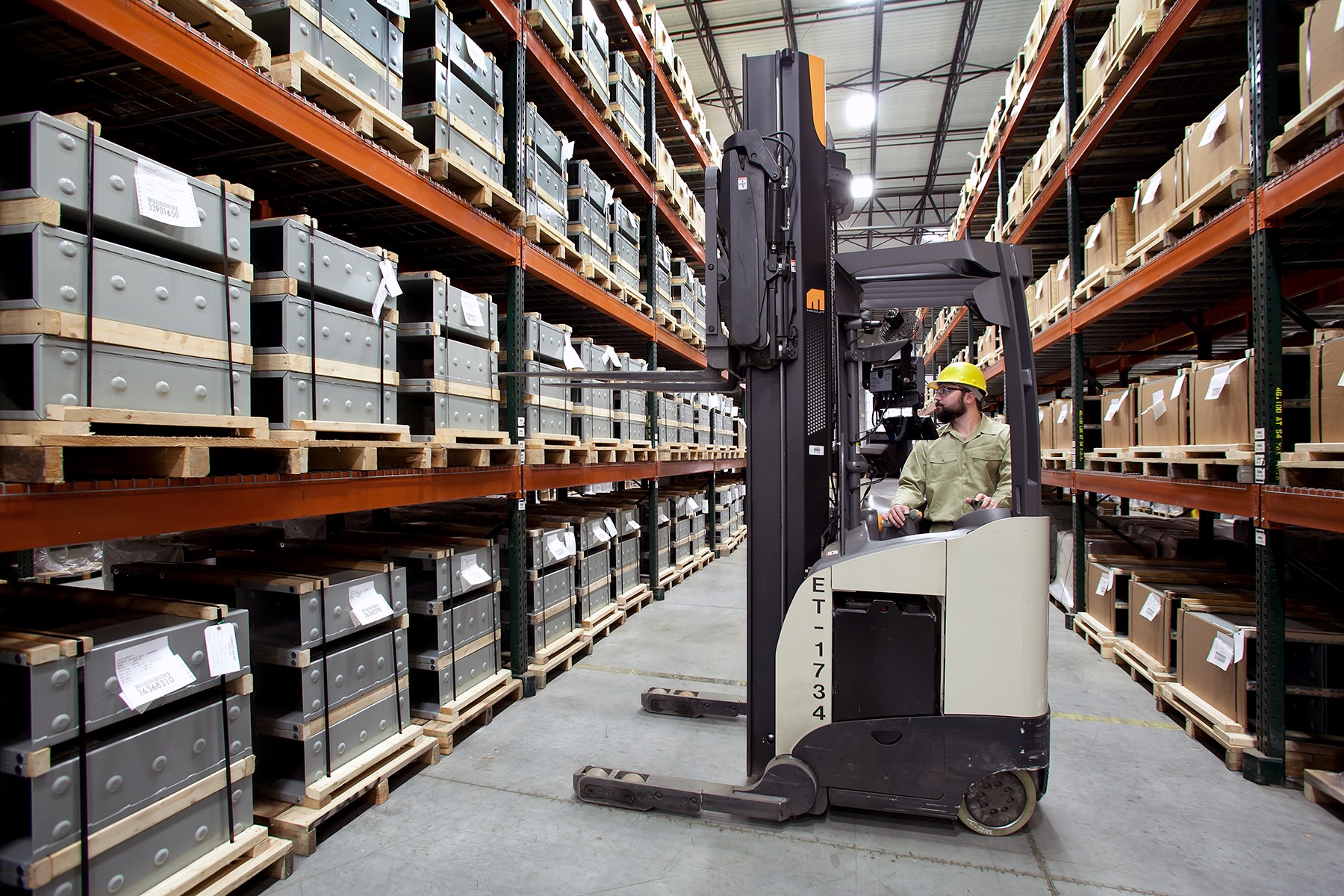
Prior to choosing Deka Ready Power, a cross-functional team at the plant, supported by a safety team from the truck manufacturer’s headquarters, was created to analyze potential solutions. Their goal was to power 50 Class III 24-volt Tuggers and 80 Class II 36-volt Stand Up/ Counterbalance trucks.
Multiple technologies were evaluated, including fuel cell and hydrogen. While hydrogen was abundant in the area around the plant, the required infrastructure was expensive. Further, the team had been tasked with developing a global power solution that would support all of the company’s plant locations.
Once lithium was determined as the preferred battery technology, the team undertook a risk analysis of lithium vendors and their product offerings. A lift-truck dealer serving the region recommended the Deka Ready Power lithium batteries as the preferred solution.
THE CLEAR SOLUTION:
First and foremost, safety was of the utmost importance. The plant’s Logistics Engineering team determined the lithium iron phosphate technology used by Deka Ready Power was much safer than other lithium battery technologies such as nickel manganese cobalt (“NMC”).
The Deka Ready Power lithium forklift battery line has one of the widest assortments of 24, 36, and 48 volt UL Listed models in the Industry. Both existing and newly developed future models that do not currently have the UL Listed mark are either in process or will be submitted to UL for future classification. For the most current listing, please reference EPM Flyer #2503 or visit www. dekareadypower.com. This UL rating was extremely important to the Logistics Engineering team.
Finally, company stability and long-term commitment were key concerns for the truck manufacturer. East Penn Manufacturing, who has been in the energy storage business for almost 75 years, offering deep expertise as well as a stellar record of strong customer care and support. The new lithium solution recommended by the lift-truck dealer and East Penn was two-fold. The Deka Ready Power 36-volt 700 Amp Hour battery was selected to power the 80 Class II forklifts. To improve efficiencies, chargers were dispersed in convenient places within the various work areas.
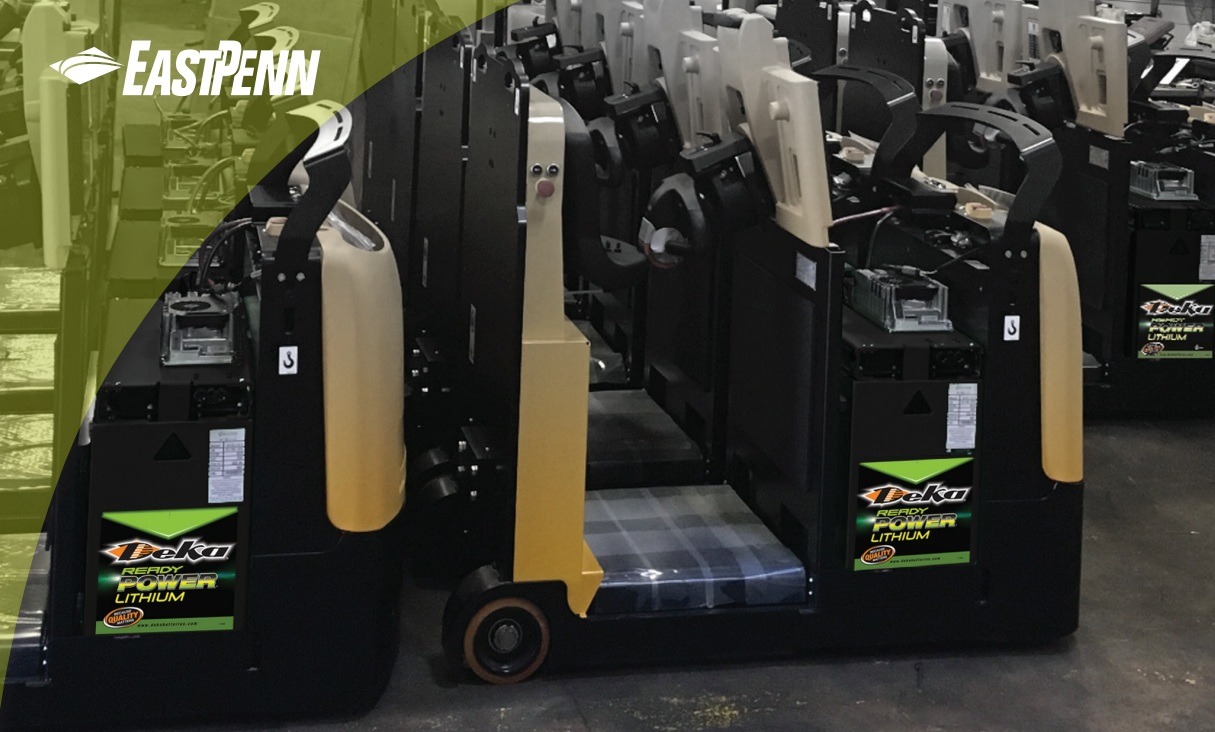
The 50 Class III Tuggers were outfitted with 24 volt 525 Amp Hour Deka Ready Power lithium batteries, and onboard chargers were mounted above each battery. This joint solution provided the truck manufacturer with the best of both worlds – a low power 50 amp-per-hour overnight charging of the 24 volt Tuggers from the convenience of any nearby 120-volt AC outlet, utilizing the onboard chargers – along with a high power charger to rapidly charge 36-volt batteries (as well as 24 volt batteries if/when needed).
THE RESULTS: MORE SPACE, FEWER
FORKLIFTS, GREATER EFFICIENCY
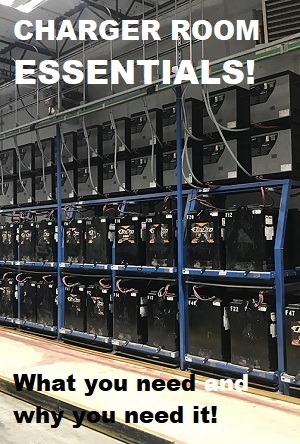
Previously, a large portion of the warehouse had been dedicated to the traditional battery charging area. With Deka Ready Power, the truck plant was able to eliminate the conventional battery racks and large bank of lead battery chargers, and repurpose 15,000 square feet of floor space for parts storage and a production assembly line.
Deka Ready Power batteries allow fast charging, deliver long run times, have higher/consistentlystrong voltage throughout each shift, and efficiently absorb regen energy from the Class II trucks. As a result, the truck plant has reduced its forklift fleet from 150 to 130. Excess equipment was moved to the truck manufacturer’s other facilities, providing additional savings to the overall enterprise.
Additionally, the plant has realized a substantial reduction in overall spending on battery maintenance since the lithium batteries were installed, as there is no longer a need to water batteries.
In recent years, the plant has become a model for environmental management in heavy-truck manufacturing. Energy use and carbon dioxide emissions have both been reduced by approximately 50 percent from 2009 levels. They are also monitoring electricity savings since the Deka Ready Power lithium batteries have shown in other customer deployments that there can be substantial savings in electricity. Lithium batteries charge very efficiently, providing extended run times, moving more pallets, and increasing productivity.
In the beginning, there was a short learning curve, as operators transitioned from returning equipment to a central charging area to now placing the batteries on charge in their own work area at the end of each shift instead. The transition to new charging practices were quickly adopted.
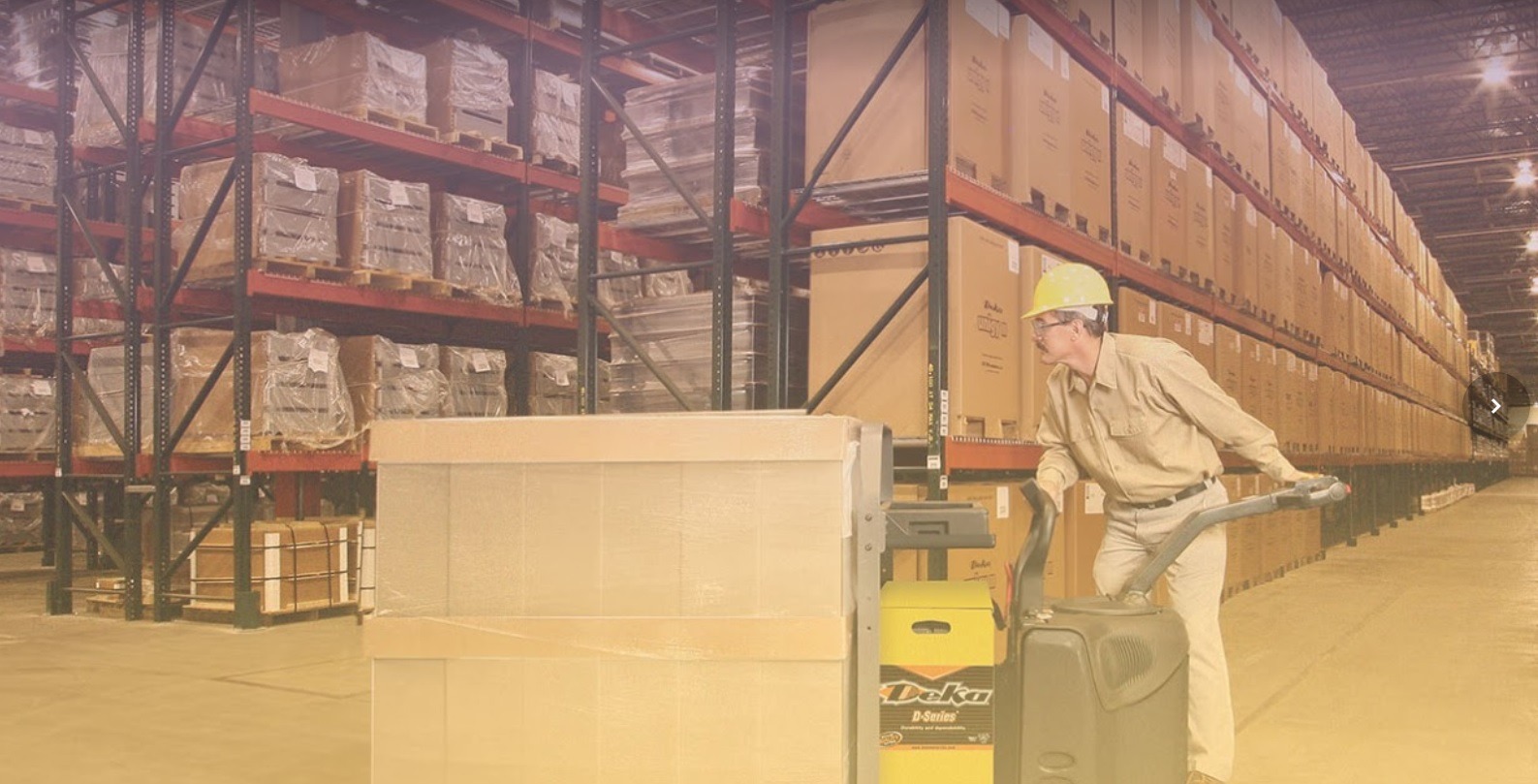
Forklift operators have reported high levels of satisfaction with the lithium solution. Operators like the “peppy” performance of the Deka Ready Power lithium batteries and how battery performance remains consistent throughout their shift. Operators also appreciate that in low charge situations, they can take either their 24 or 36 volt lift equipment to any nearby charger and get a fast fill-up of energy, rather than having to replace with a fully charged battery.
The fleet manager sees the deployment of Deka Ready Power as a model for their other manufacturing and distribution facilities, and is sharing the many “lessons-learned” with his colleagues across the company’s vast material handling function.